The signals
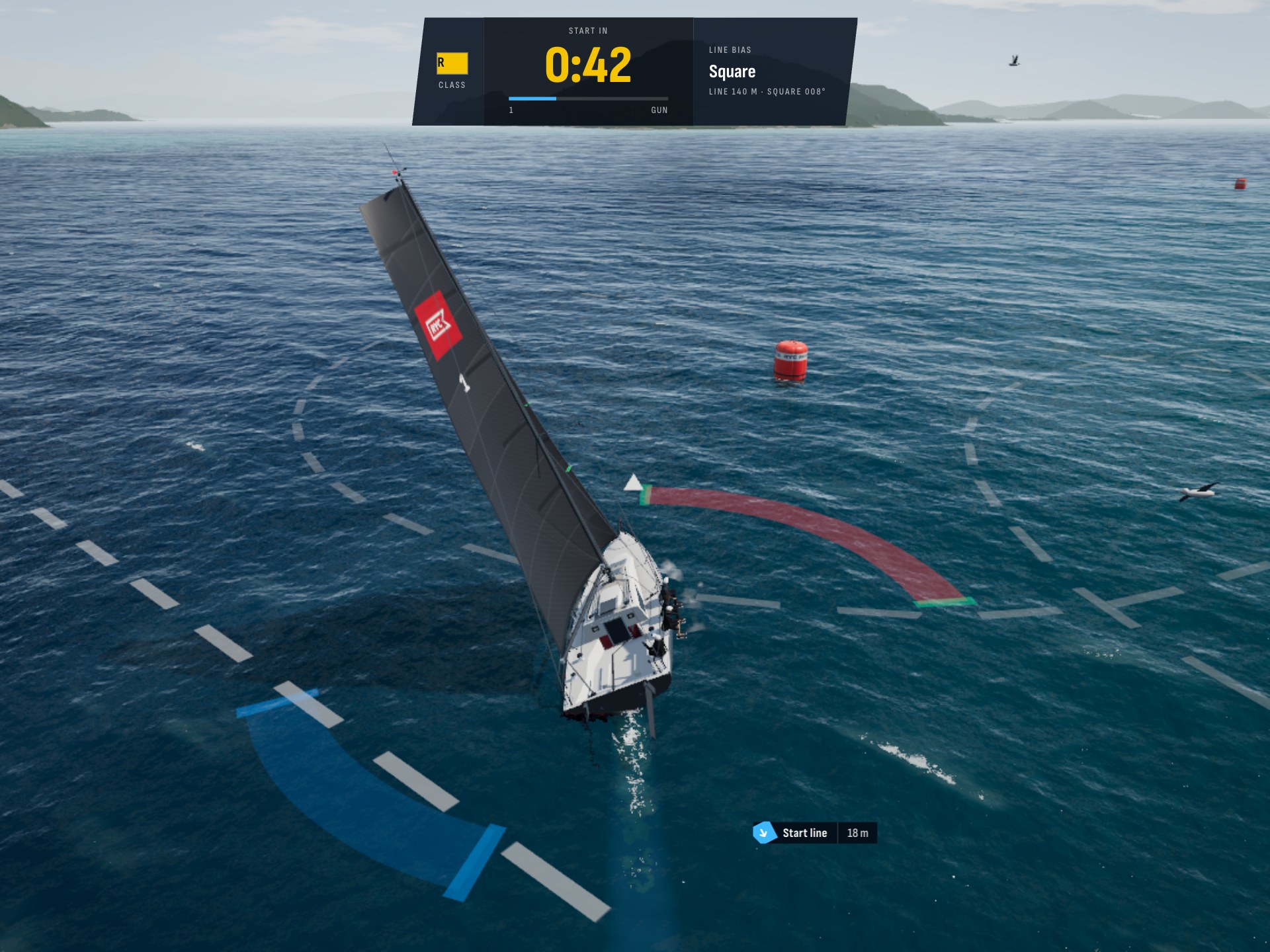
The race committee starts the countdown with flags over the committee boat, each with a sound. In the standard sequence (rule 26) the class flag goes up five minutes before the start, the preparatory flag at four, the preparatory comes down at one minute, and the class flag drops with the gun.
The preparatory flag tells you the rules for the last minute: P — be on the course side and you just go back; U — be in the triangle formed by the line and the first mark in the last minute and you are disqualified; the black flag — the same, even if the start is recalled. Up and down flies all three and lets you set a 1, 3 or 5 minute sequence for a free race.
Under P you can dip back across the line in the last minute and still start; under U or the black flag you can’t, so wait a length or two further back and come in with more speed.
Start at the favoured end
A line is rarely square to the wind. The end further upwind is favoured: start there and you are ahead of everyone who started at the other end, before anyone has sailed a metre. To check, sail along the line, or turn head to wind on it — your bow points nearer the favoured end.
The wind shifts during the sequence, so check again in the last minutes. Up and down says which end is favoured in the bar at the top: the committee boat end or the pin.
When the whole fleet piles in at the favoured end, starting a few lengths along the line, in clear air with a gap to leeward, often beats a slot in the crowd.
Time your run
The aim: on the line at full speed as the gun goes. Being on the line early and stopped is nearly as bad as being late. Know how far you are from the line and how long it takes to sail there; the game shows both, the distance and the time to the line, before the start.
A boat accelerates slowly from a standstill, so start your run a few lengths back and a few seconds early, then ease off if you are too soon. A boat length behind the line at the gun, going full speed, is a very good start.
Practise a timed run before the start: sail away from the line for 30 seconds, turn and time the way back. The turn and the build-up take longer than you’d think.
Hold your spot
To wait near the line, head up and let the sheets right out: the boat slows and stops, and can even go backwards. Keep a gap to leeward to bear away into when it is time to accelerate, and defend it: a boat that sails into it becomes the leeward boat, and you must keep clear (rule 11).
Close to the committee boat there is no room to be had at the start: a windward boat that tries to squeeze in between a leeward boat and the committee boat keeps clear.
Don’t stop dead: without speed the rudder loses its grip, and you can neither bear away into your gap in time nor answer a leeward boat’s luff.
Over early
Over the line at the gun under P, the committee flies X: go back to the pre-start side and start again; the sooner you turn, the less it costs. If too many are over to tell who, the whole start is recalled (two flags, the First Substitute) and you start again.
Going back, keep clear of every boat that is starting properly until you are wholly on the pre-start side (rule 22). Turn back where the fewest boats are.
Clear air after the gun
Behind and to leeward of another boat the wind is weaker and bent: dirty air. If you are stuck in it after the start, tack away to clear wind as soon as you can safely do it. The result page counts the seconds you spent in another boat’s dirty air.