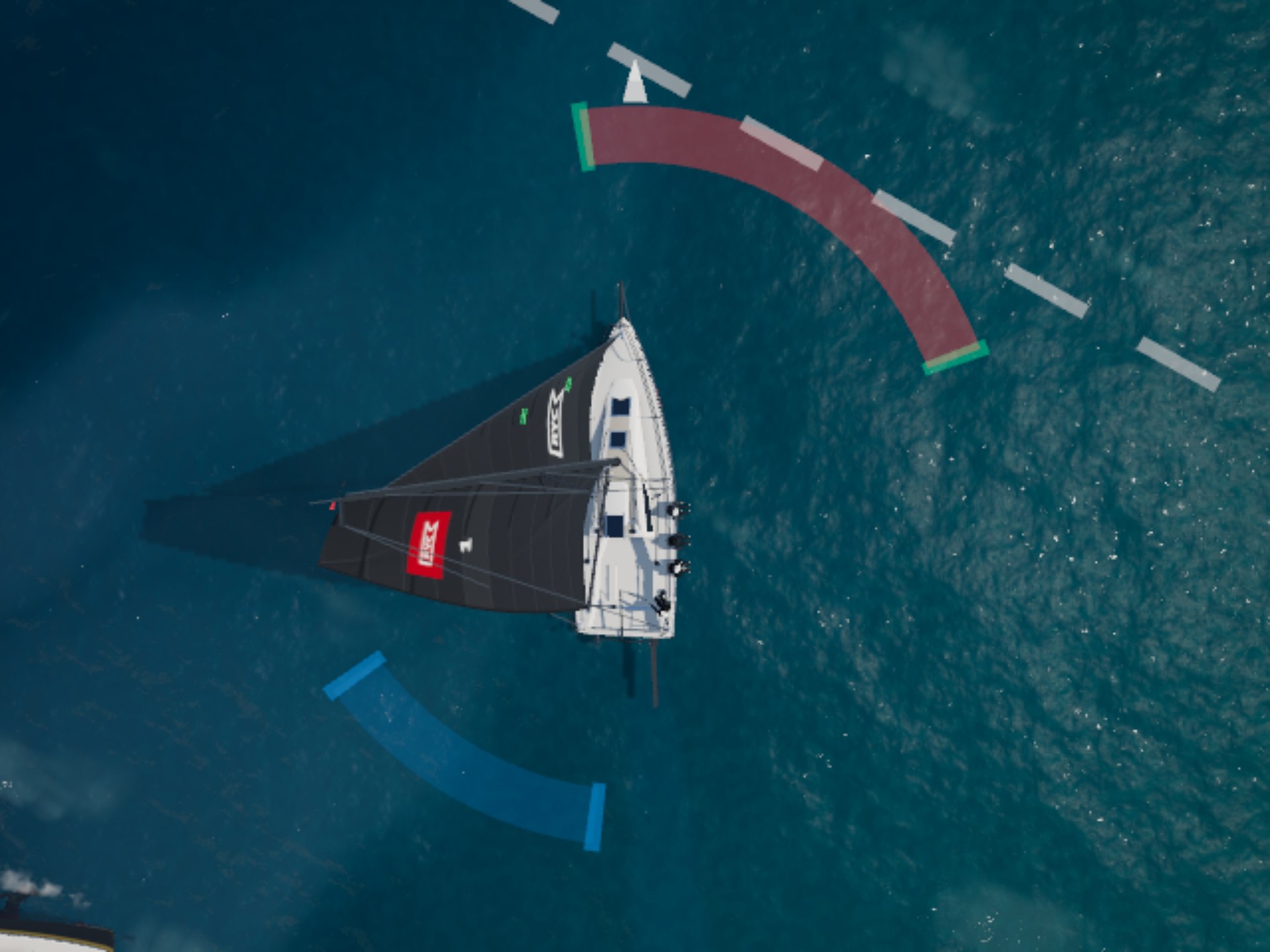
Header or lift
Sailing close-hauled, a header is a shift that comes from further ahead: to keep the sails full you have to bear away, and you point further from the mark. A lift comes from further aft: you can head up and point closer to the mark.
A header on one tack is a lift on the other. That is the whole trick.
Learn your two headings: in a steady moment, note where your bow points close-hauled on each tack. Pointing lower than that later is a header; higher, a lift.
Tack on the headers
When you are headed, tack: on the new tack the same shift lifts you, and you sail towards the mark at a better angle. Stay on the tack that points you closer to the mark, and you are always on the lifted one.
In Up and down the wind box says which you are in on the beat: Header in orange, Lift in green. After the race, the result counts your tacks in headers and in lifts.
When not to tack
Every tack costs a few boat lengths while the boat slows and builds speed again. A shift of two or three degrees that lasts ten seconds isn’t worth one. Wait until the header is real — and don’t tack into another boat’s dirty air, or onto port across a fleet on starboard.
Judge a shift against the wind’s average over the last minute or two, not against the last puff. Tack once you are headed past the middle, not at the first wobble.
Stay off the laylines
A layline is the line from which you can just fetch the mark on one tack. Reach it early and every shift works against you: a header and you have to tack again, a lift and you have sailed too far. Keep to the middle of the course until the last part of the beat. The game’s top view draws the laylines.
Overstood the mark? Don’t tack back: ease the sheets a little and reach in. It costs a few lengths; two more tacks cost more.
Gusts and lulls
A gust shows as darker water coming down the course. Upwind in a gust the boat heels and can point higher; in a lull bear away a little to keep her speed up. In a strong breeze, reef the main or change to the small jib before she heels too far.
One side of the course often has more wind for the whole race, in the game too. Find out which on the first beat, and go there on the next.
Downwind: gybe on the lifts
On the run it works the other way round. A lift makes you head up, away from the mark, to keep the same angle to the wind; gybe and the shift points you at the mark again. On a sea-breeze day the wind also builds and swings right as the race goes on, so the right side of the course often pays.