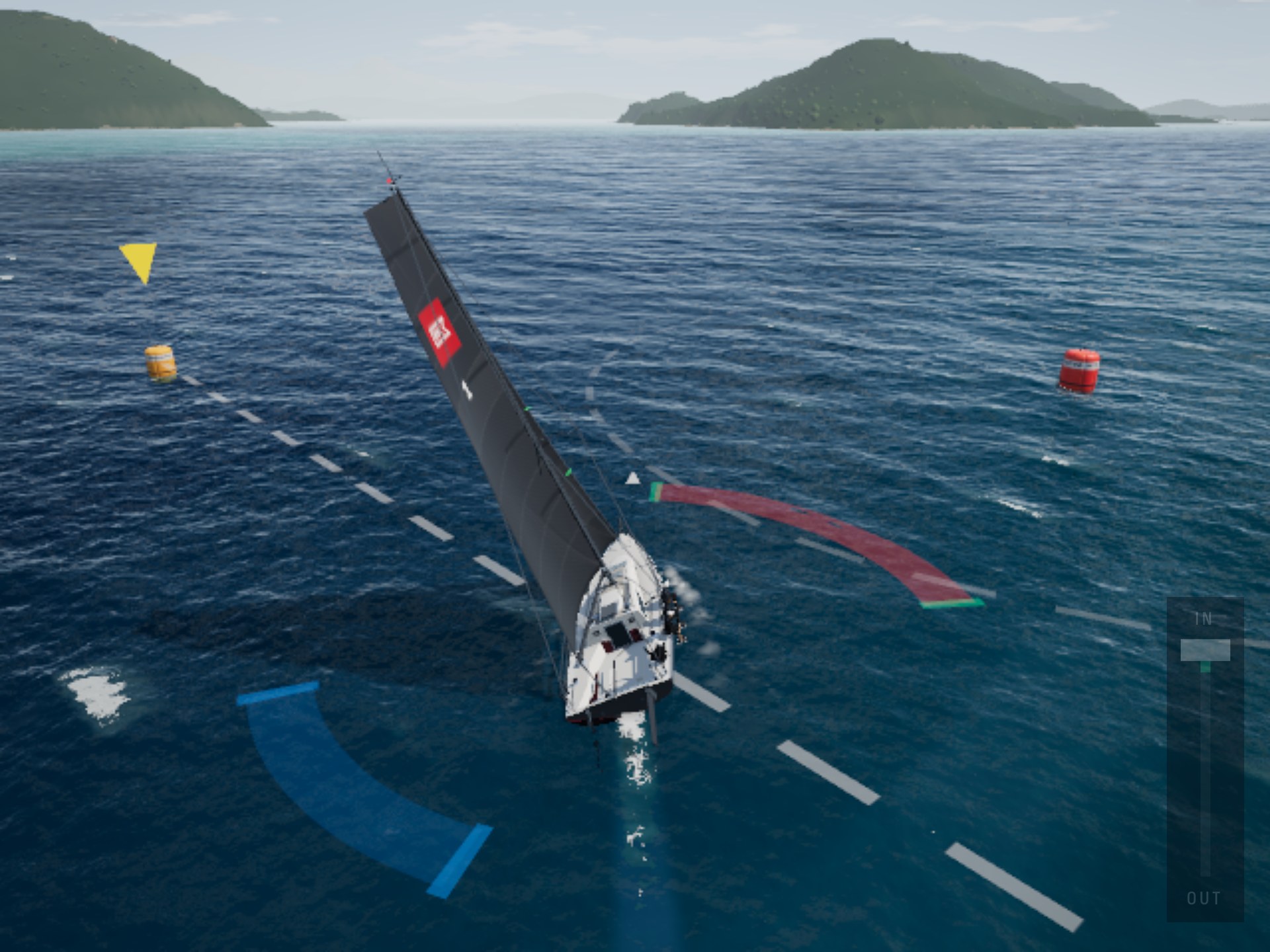
Set the sheet for the wind
A sail works when the wind flows smoothly along both sides of it. Let it out too far and its front edge flaps; pull it in too far and the flow breaks away behind it and the boat slows without showing it. Every time you change course, the sheets have to follow.
In Up and down each sheet has a green band for the wind you’re in: keep the knob in it. Or let the game trim for you and only steer.
On a real boat the telltales tell you: the windward ones lifting, pull in or bear away; the leeward ones stalling, ease out or head up.
Steer in small moves
The rudder is a brake as well as a steering wheel: every movement of it slows the boat. Make small, early corrections rather than big late ones, and let the boat sail.
Steer with the sails too: easing the main helps her bear away, pulling it in helps her head up, so the rudder has less to do.
Foot to build speed
Upwind, a slow boat pointing as high as a fast one only slips sideways. After a tack, a bad wave or a lull, bear away a few degrees, let her pick up speed, then come back up.
Foot more in waves and light air, where speed is hardest to keep; point higher in flat water and a good breeze.
Keep her upright
A boat heeled too far drags her rudder, slides to leeward and wants to round up into the wind. When a gust lays her over, ease the sheet until she comes back up; the game says so when the heel is too much.
In a gust, ease the main first and keep the jib in: she comes back upright and keeps driving.
Reef and change down in a blow
When easing the sheet isn’t enough, make the sails smaller: reef the main, and change to the small jib (the J3). A boat with less sail but upright is faster than one with full sail flat on her side.
Reef before you need to. In the game tying a reef in takes the crew about 25 seconds and a jib change half a minute, slow while they last: do it on a long leg, not just before a mark or a tack. A reef pays from about 20 knots.